The 3,000-Mile Myth
If your dad told you to change your oil every 3,000 miles, he wasn't wrong — for his era. Older engines with looser tolerances and conventional oil genuinely needed it that often. But modern engines are built tighter, run cleaner, and use oil that's engineered to last longer. Following the 3,000-mile rule in a 2020 Camry is just throwing money away.
That said, we see the opposite problem just as often: people who think "synthetic oil lasts forever" and go 15,000 miles without a change. By that point the oil is broken down, full of contaminants, and not protecting anything. The real answer lives somewhere in the middle, and it depends on three things: your car, your oil, and how you drive.
Conventional Oil: 5,000 to 7,500 Miles
If you're running conventional motor oil, plan on changing it every 5,000 to 7,500 miles. Most manufacturers have moved away from the old 3,000-mile interval, but conventional oil still breaks down faster than synthetic. It oxidizes sooner, thins out under heat, and picks up contaminants quicker.
Conventional oil works fine in older vehicles, trucks that aren't turbocharged (if you drive a diesel truck, different rules apply), and cars with simple, naturally aspirated engines. If your owner's manual calls for conventional 5W-30, you don't need to upgrade to synthetic unless you want longer intervals or drive in demanding conditions.
Full Synthetic: 5,000 to 6,000 Miles in Raleigh
Manufacturer manuals may say 7,500 or even 10,000 miles for full synthetic. In a lab, that's fine. In Raleigh — with 52 days a year above 90°F, stop-and-go on I-440, and humidity that breaks oil down faster — most experienced mechanics recommend 5,000 to 6,000 miles. We see the difference in what comes out of the drain pan.
Synthetic oil handles temperature swings better than conventional, which matters here. But "better" doesn't mean "unlimited." Pushing oil to 10,000 miles in Raleigh driving conditions means running it past the point where it protects your engine well. The $60-$80 difference between a 5K and 10K interval is cheap insurance.
European Vehicles: Follow the Spec, Not the Miles
This is where it gets specific. BMW, Mercedes, Audi, and VW don't just require synthetic — they require oil that meets a specific approval code. BMW wants LL-01 or LL-04. Mercedes requires 229.5 or 229.52. VW calls for 502/505. These approvals matter more than the brand name on the bottle.
European manufacturers quote longer intervals — 10,000 to 15,000 miles — but 5,000 to 7,500 miles is a safer target for Raleigh drivers. Our summers put extra stress on oil, and the stop-and-go traffic on Capital Blvd and Glenwood Avenue counts as "severe" driving in every manufacturer's book. If you own a European car, our oil change service uses the exact manufacturer-specified oil your car requires.
How Raleigh Driving Conditions Affect Your Interval
Your owner's manual lists two maintenance schedules: normal and severe. Most people assume they fall under "normal." Most people are wrong. Severe driving conditions include:
- Stop-and-go traffic — if you commute on I-40, Capital Blvd, or Glenwood Ave during rush hour, that counts
- Short trips under 10 miles — driving from Five Points to North Hills and back without the engine fully warming up
- Extreme heat — Raleigh summers with heat indexes above 100 degrees put extra thermal stress on oil
- Dusty or unpaved roads — common around construction zones and rural areas outside the beltline
- Towing or hauling — pulling a boat to Jordan Lake or a trailer to the mountains
If two or more of these describe your driving, stick to the lower end of the interval. For full synthetic in Raleigh, that means 5,000 miles.
Due for an Oil Change?
We stock conventional, full synthetic, and European-spec oils. No appointment needed — most oil changes are done in under an hour.
Call (984) 254-5642Oil Life Monitors: Helpful but Not Perfect
Most cars built after 2010 have an oil life monitoring system. It tracks engine RPM, temperature, drive cycles, and cold starts to estimate when your oil needs changing. These systems are generally good — they adjust for your actual driving conditions instead of relying on a fixed mileage number.
But they're not perfect. They can't measure the actual chemical state of the oil. They don't know if your oil filter is getting clogged. And they definitely can't tell if the last shop used the wrong viscosity. We recommend treating the oil life monitor as a guideline, not gospel. If it says 40% life remaining but you're at 8,000 miles on conventional oil, come in.
What Happens When You Skip Oil Changes
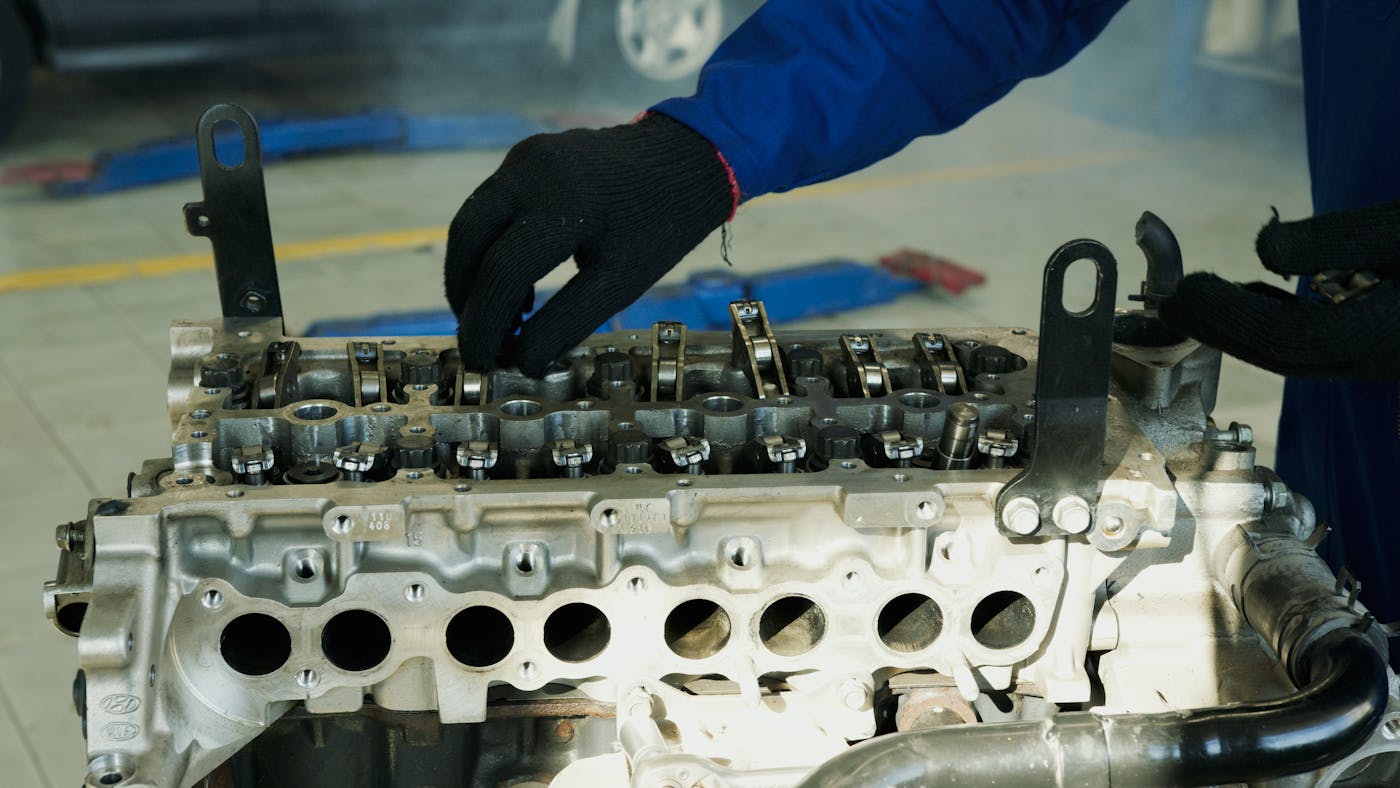
We see the consequences of neglected oil changes every week. It starts with sludge — old oil that turns into a thick, tar-like substance that coats the inside of your engine. Sludge blocks oil passages, starves bearings, and bakes onto valve covers. Once it's there, a simple oil change won't fix it.
The progression looks like this: degraded oil leads to increased friction, which causes excessive heat, which accelerates wear on bearings, rings, and cam surfaces. Your engine's cooling system can only do so much when internal friction is generating extra heat from neglected oil. Eventually you're looking at engine repair or replacement — a bill that runs thousands of dollars. All because of a service that costs $40-$80.
We had a customer bring in a 2018 Hyundai Tucson with 62,000 miles. The oil looked like maple syrup. Turns out they'd gone over 20,000 miles since the last change. The engine was full of sludge, the timing chain tensioner was failing from oil starvation, and the repair estimate was north of $3,000. A $60 oil change every 7,500 miles would have prevented every bit of it.
Quick Reference: When to Change Your Oil
Here's a straightforward breakdown based on what we see and what manufacturers recommend:
- Conventional oil: Every 3,000-5,000 miles or 6 months
- Full synthetic (Raleigh driving): Every 5,000-6,000 miles or 6 months
- European cars (BMW, Mercedes, Audi, VW): Every 5,000-7,500 miles with approved spec oil
- Severe conditions (most Raleigh drivers): Stick to the lower end of the range
- Turbocharged engines: Change more frequently — turbos run hot and stress oil harder
When in doubt, check your dipstick. If the oil is black, gritty, or smells burnt, it's time regardless of mileage. And if you can't remember your last oil change, it's overdue.
We keep it simple at our shop. Tell us what you drive, and we'll tell you exactly which oil and filter you need, how often to come back, and what it costs. No upsells, no flushes you don't need, no pressure. Just honest maintenance advice from people who actually work on engines every day.